






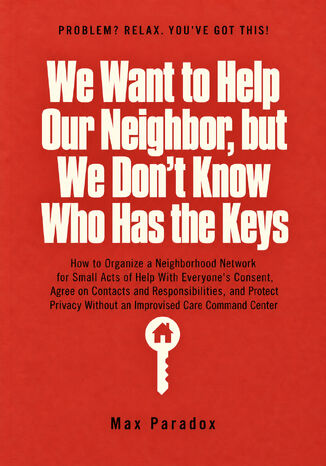
We Want to Help Our Neighbor, but We Don't Know Who Has the Keys - How to Organize a Neighborhood Network for Small Acts of Help With Everyone's Consent, Agree on Contacts and Responsibilities, and Protect Privacy Without an Improvised Care Command Center Max Paradox
 angielski
- Autor:
- Max Paradox
- Wydawnictwo:
- SELF-PUBLISHER
- Ocena:
- Stron:
- 190
- Dostępne formaty:
-
PDFePub
-
 Publikacja stworzona ze wsparciem AI
Opis
książki
:
We Want to Help Our Neighbor, but We Don't Know Who Has the Keys - How to Organize a Neighborhood Network for Small Acts of Help With Everyone's Consent, Agree on Contacts and Responsibilities, and Protect Privacy Without an Improvised Care Command Center
Your neighbor needs help with a small errand. Ten minutes later, three people are volunteering, somebody is collecting emergency contacts, and the residents' group is debating who should hold a spare key. Everyone has excellent intentions. Unfortunately, nobody has actually agreed to complete the errand.
Welcome to neighborhood cooperation, where a five-minute favor can develop into an administrative operation with surprisingly little warning.
In We Want to Help Our Neighbor, but We Don't Know Who Has the Keys, Max Paradox explores how ordinary people can help one another without accidentally creating an amateur care department, invading anyone's privacy, or turning the most reliable volunteer into an unpaid full-time coordinator.
With sharp observational humor, familiar everyday situations, and practical guidance, this book shows how to make small acts of kindness genuinely useful.
You'll discover how to offer assistance without deciding that somebody needs rescuing, how to establish meaningful consent, and how to distinguish an accepted commitment from an enthusiastic message that says, "Someone should definitely do something."
The book explains how to match particular tasks with suitable volunteers, respect everyone's time, and handle competing requests when the neighborhood has three problems, one available car, and no realistic way to be in three places at once.
You'll also learn why a shared group chat is not a confidential filing cabinet, why possessing a spare key does not authorize reorganizing somebody's kitchen, and why shopping on another person's behalf requires rather more financial clarity than "Don't worry, we'll settle up later."
But neighborly cooperation is not always uncomplicated. Family members may disagree about what assistance someone should receive. Volunteers may forget important commitments. Recipients may change their minds. Some needs may grow beyond what informal helpers can safely provide.
Rather than offering heroic promises or another collection of compulsory forms, Max Paradox examines how to respond to these situations with clear communication, sensible boundaries, respect for independence, and an understanding of when professional support is necessary.
You'll find practical ways to start a small neighborhood network, test it over the first thirty days, recognize when unnecessary procedures are creeping back, and keep the arrangement manageable after the initial enthusiasm has faded.
Most importantly, this is a guide to helping people on their own terms. The objective is not to make every resident dependent on an efficient committee. It is to make assistance easier to request, safer to provide, and simpler to stop when it is no longer wanted.
Written for neighbors, volunteers, community-minded residents, and anyone who has ever watched a straightforward favor turn into a group discussion involving seventeen messages and absolutely no progress, this book combines humor with practical common sense.
Because being a good neighbor does not mean knowing everyone's business, holding everyone's keys, or answering everyone's telephone calls.
Sometimes it simply means asking what would help, doing what you agreed to do, and knowing when to leave the rest alone.
This publication was prepared using tools that support the creative process, including artificial intelligence solutions. The final concept, structure and editing are the responsibility of the author.
Wybrane bestsellery
-
 MIĘDZYNARODOWY BESTSELLER, DZIĘKI KTÓREMU ODZYSKASZ SPOKÓJ I ODNAJDZIESZ UKOJENIE. Osiem milionów dróg do szczęścia to drogowskaz na czasy, w których każdy z nas poszukuje ukojenia. Hiroko Yoda zaprasza cię do świata uważności, czerpiąc z uzdrawiającej mądrości japońskiej kultury i tradycji. Zainspirowana buddyzmem, mądrością shugendo czy mistycyzm
-
ebook
-
audiobook
42 pkt
(32,90 zł najniższa cena z 30 dni)
42.32 zł
52.90 zł (-20%) -
-
 Chcesz rozpocząć przygodę z wykrywaczem metali, ale nie wiesz, od czego zacząć? A może od lat przeczesywanie pól i lasów z cewką to Twoja pasja i chcesz wejść na wyższy poziom poszukiwań? Dobrze się składa trzymasz bowiem w ręku warsztatowy przewodnik po świecie współczesnej detektorystyki, oparty na kompetencjach zdobywanych przez autora podczas tysięcy godzin spędzonych w terenie. Ta książka to praktyczna wiedza bez zbędnej teorii. Prawdziwe doświadczenia bez internetowych mitów. Konkrety bez lania wody.
-
ebook
-
książka
29 pkt
(27,90 zł najniższa cena z 30 dni)
29.95 zł
59.90 zł (-50%) -
-
 Czy lekarstwa na ADHD odbiorą mi kreatywność? Dlaczego tracę wątek w połowie rozmowy? Rozpraszam się w czasie seksu - co mogę z tym zrobić? Czy z ADHD da się wyrosnąć? Jakie są dobre i złe zawody dla osób z ADHD? Erik Gude i Cate Osborn, prowadzący podcast o życiu z ADHD, odpowiadają na każde z tych pytań. Zamiast ogólnych rad, oferują praktyczne s
-
ebook
38 pkt
(27,90 zł najniższa cena z 30 dni)
38.31 zł
47.90 zł (-20%) -
-
 Depresja jest poważnym zaburzeniem. Dotknięci nią ludzie opisują ją często jako życie w mroku, cierpieniu i poczuciu braku sensu. Wielu z nich wie o niej bardzo dużo i próbowało niemal wszystkiego, by ją pokonać: psychoterapii indywidualnej, terapii grupowej, leków stosowanych naprzemiennie, razem lub oddzielnie. Czasem leczenie pomaga trwale. Czasem na chwilę. A czasem nie przynosi oczekiwanej ulgi.
-
ebook
-
audiobook
-
książka
32 pkt
(27,90 zł najniższa cena z 30 dni)
32.95 zł
59.90 zł (-45%) -
-
 W 2010 roku Daisuke Yosumi porzucił prestiżową posadę w Warner Music Japan i postanowił spełnić swoje największe marzenie - wyjechał do Nowej Zelandii, gdzie zaczął prowadzić samowystarczalne, minimalistyczne życie. Odpuścił pogoń za karierą, statusem, dobrami materialnymi, zrezygnował z dziewięćdziesięciu procent swoich dochodów i odzyskał siebie. Dziś inspiruje miliony ludzi do odkrywania wolności i szczęścia poprzez odpuszczanie tego, co zbędne.
-
ebook
47 pkt
(35,90 zł najniższa cena z 30 dni)
47.20 zł
59.00 zł (-20%) -
-
 To nie jest zbiór ładnych cytatów ani szybka dawka motywacji. To praktyczny przewodnik pokazujący, jak starożytne mądrości mogą odpowiadać na współczesne wyzwania. Od stoickiego spokoju po epikurejską radość, od mocy myślenia obiektywistycznego Ayn Rand po praktyczne aspekty pragmatyzmu znajdziesz tu inspirujące historie i wskazówki, jak przekształcić filozoficzne idee w codzienne działania, niezależnie od Twojej życiowej roli. Odkryjesz, jak myśli wielkich filozofów mogą się stać praktycznym narzędziem do budowania lepszego życia.
-
ebook
-
audiobook
-
książka
29 pkt
(27,90 zł najniższa cena z 30 dni)
29.95 zł
59.90 zł (-50%) -
-
 Ta książka przedstawia pięć kluczowych umiejętności interpersonalnych: budowanie relacji, ciekawość, komunikację, ambicję i rozwiązywanie konfliktów. Szczegółowo opisuje różnicę między asertywnością a agresją, pokazując, jak skutecznie wyrażać swoje potrzeby bez naruszania granic innych. Praktyczne narzędzia obejmują techniki aktywnego słuchania, zarządzanie trudnymi osobowościami, prowadzenie konstruktywnych rozmów i negocjacje korzystne dla wszystkich stron. Każdy rozdział zawiera konkretne ćwiczenia i strategie, które można natychmiast zastosować w codziennej pracy by budować silniejsze zespoły i osiągać lepsze rezultaty biznesowe.
-
ebook
-
książka
24 pkt
(22,90 zł najniższa cena z 30 dni)
24.95 zł
49.90 zł (-50%) -
-
 Ta książka to podróż dziennikarza i certyfikowanego przewodnika kąpieli leśnych do miejsc, gdzie kontakt z naturą wykorzystuje się świadomie jako wsparcie zdrowia psychicznego i fizycznego. Autor rozmawia z naukowcami z różnych krajów, odwiedza certyfikowane lasy terapeutyczne i sprawdza na sobie, co naprawdę dzieje się z człowiekiem, gdy zwalnia i zaczyna uważnie doświadczać przyrody.
-
ebook
-
książka
35 pkt
(29,90 zł najniższa cena z 30 dni)
35.70 zł
64.90 zł (-45%) -
-
 Ponadczasowy zbiór nauk kultowego mistrza zen, który pokazuje, jak poprzez prostą, codzienną praktykę odnaleźć autentyczność i wewnętrzny spokój. Inspirujące wykłady pomagają zrozumieć, czym jest "bycie sobą" w duchu zen i jak urzeczywistniać tę postawę w codziennym życiu.
-
ebook
33 pkt
(26,90 zł najniższa cena z 30 dni)
33.12 zł
39.90 zł (-17%) -
-
 Jeśli zmagasz się z otyłością, to jest to poradnik dla Ciebie! Jeśli jesteś kimś bliskim dla osoby, która usiłuje wyleczyć się z otyłości, też będzie to dobra lektura dla Ciebie. Jeżeli jesteś lekarzem, dietetykiem, edukatorem lub innym pracownikiem ochrony zdrowia mającym do czynienia z pacjentami otyłymi, ta publikacja jest także dla Ciebie. Pora
-
ebook
47 pkt
(35,90 zł najniższa cena z 30 dni)
47.20 zł
59.00 zł (-20%) -

Max Paradox - pozostałe książki
-
 W poniedziałek kupujesz nowy planer. We wtorek masz już idealnie rozpisane obowiązki. W środę odkrywasz kilka drobnych opóźnień. W czwartek planer leży zamknięty, a ty szukasz aplikacji, która tym razem naprawdę odmieni twoje życie. Brzmi znajomo? Witaj w klubie ludzi, którzy potrafią zaprojektować genialny system organizacji, ale później muszą jes
-
ebook
23 pkt
(5,00 zł najniższa cena z 30 dni)
23.99 zł
29.99 zł (-20%) -
-
 Jak przestać przejmować się opinią innych. Jak słuchać ludzi, nie oddając im kierownicy własnego życia to praktyczny przewodnik dla osób, które chcą lepiej zrozumieć omawiany temat i odzyskać wpływ na codzienne decyzje. Autor wyjaśnia mechanizmy działające w tle, porządkuje najważniejsze pytania i pokazuje konkretne perspektywy bez pustych obietnic
-
ebook
23 pkt
(5,00 zł najniższa cena z 30 dni)
23.99 zł
29.99 zł (-20%) -
-
 Kochacie się, planujecie wspólne życie i właśnie znaleźliście mieszkanie. Jest balkon, wymarzona kuchnia i miejsce na kanapę. Jest też mały szczegół: jedno z was wnosi większy wkład, drugie ma inne możliwości finansowe, a oboje zakładacie, że "jakoś się dogadacie". Brzmi romantycznie. Tylko że bank, notariusz i wieloletnie zobowiązania nie są szcze
-
ebook
29 pkt
-
-
 Kupiłeś samochód elektryczny, żeby jeździć taniej, ciszej i wygodniej. Tymczasem przed wyjazdem na weekend analizujesz temperaturę, wiatr, dostępność ładowarek i poziom baterii z dokładnością godną kierownika wyprawy polarnej. Do celu zostało 280 kilometrów, samochód pokazuje 310 kilometrów zasięgu, a ty zastanawiasz się, czy przypadkiem nie powini
-
ebook
29 pkt
-
-
 Twoje dziecko mówi dwoma językami, ale cała rodzina ma przynajmniej pięć różnych teorii na temat tego, jak powinno to robić? Witamy w świecie dwujęzycznego wychowania, gdzie zwykłe rodzinne spotkanie potrafi zamienić się w międzynarodową konferencję ekspertów bez odpowiednich kwalifikacji. Babcia uważa, że mieszanie języków jest niebezpieczne. Dzia
-
ebook
29 pkt
-
-
 Kiedyś wystarczyło spojrzeć na opakowanie, żeby przeczytać instrukcję. Dziś potrzebujesz okularów, odpowiedniego oświetlenia, trzech prób ustawienia przedmiotu i cierpliwości godnej archeologa rozszyfrowującego starożytne pismo. Telefon ma ekran o imponującej rozdzielczości, ale niektóre przyciski nadal wyglądają jak ziarenka maku. Dokumenty zawier
-
ebook
29 pkt
-
-
 Jest piątek. Twoje dziecko wraca z nowej szkoły. Pytasz, czy ma już kolegów. Odpowiada: "Nie wiem". Ty uśmiechasz się uspokajająco, a w głowie uruchamiasz sztab kryzysowy. W końcu minęło pięć dni. Gdzie ta obiecana paczka? Dlaczego nikt nie zaprosił go na urodziny? I czy naprawdę wypada napisać do wychowawcy wiadomość zaczynającą się od słów "Pilna
-
ebook
29 pkt
-
-
 Mieszkasz w TBS-ie, regularnie płacisz czynsz, kiedyś wpłaciłeś partycypację, a mimo to nadal nie do końca rozumiesz, za co właściwie płacisz i jakie masz prawa? Witaj w świecie, w którym mieszkanie jest twoim domem, ale nie twoją własnością, a odpowiedź na proste pytanie potrafi wymagać przeczytania kilku umów, trzech regulaminów i wiadomości od a
-
ebook
29 pkt
-
-
 Twoje dziecko ma alergię. Ty masz zalecenia od lekarza, plan bezpieczeństwa i oczy dookoła głowy. A cała reszta świata ma dla ciebie dobrą radę, domowe ciasteczko i zapewnienie, że "od jednego kawałeczka przecież nic się nie stanie". Witaj w rodzicielstwie, w którym zwykły poczęstunek potrafi zamienić się w przesłuchanie dotyczące składników, szkol
-
ebook
29 pkt
-
-
 Masz w ręku orzeczenie dotyczące potrzeb edukacyjnych swojego dziecka. Dokument został przygotowany przez specjalistów, zawiera zalecenia i powinien pomagać w organizacji odpowiedniego wsparcia. Teoretycznie wszystko jest jasne. W praktyce szkoła ma własną interpretację, nauczyciele zapewniają o indywidualnym podejściu, a ty po raz kolejny zastanaw
-
ebook
29 pkt
-




Szczegóły książki
- ISBN Ebooka:
- 978-83-848-3902-7, 9788384839027
- Data wydania ebooka :
-
2026-11-09
 Data wydania ebooka często jest dniem wprowadzenia tytułu do sprzedaży i może nie być równoznaczna
z datą wydania książki papierowej. Dodatkowe informacje możesz znaleźć w darmowym fragmencie.
Jeśli masz wątpliwości skontaktuj się z nami sklep@ebookpoint.pl.
- Język publikacji:
- angielski
- Rozmiar pliku Pdf:
- 1.2MB
- Rozmiar pliku ePub:
- 1.8MB
- Pobierz przykładowy rozdział PDF »
- Pobierz przykładowy rozdział EPUB »

self publisher - inne książki
-
 Do świątecznego Leavenworth przyjechała tylko na kilka dni. Festiwal, dopilnowanie szczegółów i powrót do Seattle - taki był plan. Bez komplikacji i bez mężczyzny, który mógłby namieszać jej w głowie. Beckett miał swoje zasady, własny warsztat i zdecydowanie za mało cierpliwości do kobiet takich jak Harper. Los najwyraźniej nie zamierzał się nimi p
-
ebook
35 pkt
-
-
 Na polskiej wsi jeszcze niedawno wiedziano, jak zamówić ból, jak odczynić urok rzucony zazdrosnym spojrzeniem i co położyć pod progiem nowego domu, żeby dobrze się w nim żyło. Ta wiedza nie zniknęła, tylko przycichła, rozproszona w przekazach babek, zapiskach etnografów i zwyczajach, których dziś często nie potrafimy już odczytać. Ta książka zbiera
-
ebook
36 pkt
-
-
 Gdy ginie jedyny syn przywódcy Northern Exchange, przyszłość jednej z najpotężniejszych kanadyjskich formacji mafijnych staje pod znakiem zapytania. Claude Girard ma jednak córkę. I człowieka, którego zamierza uczynić swoim następcą. Dwunastoletnia Claire nie wie jeszcze, że podpisany przez ojca kontrakt odbierze jej dzieciństwo. Zanim zostanie żon
-
ebook
32 pkt
-
-
 Frytkownica beztłuszczowa stoi w wielu polskich kuchniach, ale po kilku miesiącach używania zwykle sprowadza się do trzech, czterech sprawdzonych dań. Ta książka powstała z przekonania, że urządzenie, które potrafi w kwadrans skarmelizować dynię, wysuszyć chipsy z jabłek i wypiec chrupiące sakiewki z grzybami, zasługuje na coś więcej niż odgrzewani
-
ebook
36 pkt
-
-
 Zalecenie lekarza brzmi zwykle krótko: "proszę przejść na dietę lekkostrawną". Bez wyjaśnienia, co to właściwie znaczy, i bez odpowiedzi na pytanie, co w takim razie zjeść dziś na obiad. Ta książka powstała po to, żeby wypełnić tę lukę - jest praktycznym przewodnikiem dla wszystkich, którzy muszą lub chcą odciążyć swój przewód pokarmowy, a nie zami
-
ebook
36 pkt
-
-
 Masz w ciele sieć naczyń dłuższą niż wszystkie drogi krajowe razem wzięte, kilkaset stacji filtracyjnych i płyn, który przepływa przez klatkę piersiową w ilości kilku litrów na dobę. I najprawdopodobniej nigdy nie poświęciłeś jej pięciu minut uwagi. W szkole poznałeś serce i płuca. O tym układzie usłyszałeś zdanie, może dwa - najczęściej przy okazj
-
ebook
36 pkt
-
-
 Ostatni tom serii Sanctuary! On - poważny prawnik i członek klubu Sanctuary. Ona - córka konserwatywnego teleewangelisty. Pechowo - przyszła synowa jego wroga. Daisy Bell ma zaplanowaną przyszłość. Jej rolą jest ładnie wyglądać, szczerze się modlić i wspierać rodzinę przyszłego męża w dążeniu do zdobycia władzy. Wszystko się zmienia, gdy odkrywa
-
ebook
30 pkt
-
-
 CZY PROBLEMEM SĄ IDIOCI U WŁADZY - CZY SYSTEM, KTÓRY ICH PRODUKUJE? 8 listopada 2016 roku świat zamarł. Potem był Brexit, Węgry, Brazylia, Polska. Za każdym razem pojawiało się to samo pytanie: jak to możliwe? Autor stawia tezę, która zmienia perspektywę: złych liderów nie produkują po prostu źli ludzie. Produkują ich określone warunki - rozpad wsp
-
ebook
19 pkt
-
-
 A co, jeśli najsurowszy sędzia w Twojej głowie... wcale nie mówi Twoim głosem? Przez niemal cztery dekady John Mark Linden-ceniony coach, menedżer i wykładowca akademicki - perfekcyjnie żonglował maskami sukcesu. Wierzył, że ludzką naturę można w pełni skontrolować chłodnym, czystym intelektem. Wszystko pękło w jeden wieczór przy kuchennym stole, g
-
ebook
39 pkt
-
-
 Pamięć Genetyczna - Tom 1 - Omnis Ben Foster osiągnął wszystko, o czym inni mogą tylko marzyć: odnoszącą sukcesy firmę technologiczną, lojalnych pracowników i niezależność finansową. Jednak w głębi duszy czuje się pusty. Kiedy postanawia zostawić wszystko za sobą i podróżować po Ameryce Południowej, nie ma pojęcia, że fatalne wydarzenie na peruw
-
ebook
-
audiobook
14 pkt
-
Dzięki opcji "Druk na żądanie" do sprzedaży wracają tytuły Grupy Helion, które cieszyły sie dużym zainteresowaniem, a których nakład został wyprzedany.
Dla naszych Czytelników wydrukowaliśmy dodatkową pulę egzemplarzy w technice druku cyfrowego.
Co powinieneś wiedzieć o usłudze "Druk na żądanie":
- usługa obejmuje tylko widoczną poniżej listę tytułów, którą na bieżąco aktualizujemy;
- cena książki może być wyższa od początkowej ceny detalicznej, co jest spowodowane kosztami druku cyfrowego (wyższymi niż koszty tradycyjnego druku offsetowego). Obowiązująca cena jest zawsze podawana na stronie WWW książki;
- zawartość książki wraz z dodatkami (płyta CD, DVD) odpowiada jej pierwotnemu wydaniu i jest w pełni komplementarna;
- usługa nie obejmuje książek w kolorze.
Masz pytanie o konkretny tytuł? Napisz do nas: sklep@ebookpoint.pl
Książka drukowana


Oceny i opinie klientów: We Want to Help Our Neighbor, but We Don't Know Who Has the Keys - How to Organize a Neighborhood Network for Small Acts of Help With Everyone's Consent, Agree on Contacts and Responsibilities, and Protect Privacy Without an Improvised Care Command Center Max Paradox
(0)